


Sal Khan built one of the most visited education platforms on the internet, yet his personal wealth is one of the hardest numbers in tech to pin down. Search his name and you will find estimates anywhere from five million dollars to over a billion dollars, often on the same page. That gap alone tells you something important: Khan Academy is a nonprofit, and Sal Khan owns none of it.
This article walks through what is actually known about Sal Khan net worth, where the confusing numbers come from, and why a man who could have built a traditional tech fortune chose not to.
Sal Khan’s Early Life: Three MIT Degrees and a Cousin Who Needed Help
Salman “Sal” Khan was born on October 11, 1976, and grew up in Metairie, Louisiana, raised by a single mother after his father passed away when Khan was young. Money was tight during his childhood, a detail he has referenced often when explaining why free education matters to him personally.
Khan’s academic record is where his story usually starts. He earned three degrees from the Massachusetts Institute of Technology: a bachelor’s in mathematics, a bachelor’s in electrical engineering and computer science, and a master’s in electrical engineering and computer science. He later added an MBA from Harvard Business School, giving him a rare combination of technical depth and business training before he ever thought about education as a career.
The turning point came in 2004. Khan’s young cousin Nadia was struggling with math, and Khan began tutoring her remotely using simple online tools. When more relatives asked for help, he started recording short explainer videos and posting them to YouTube in 2006 so multiple students could watch on their own schedule. That informal side project became the seed of Khan Academy.
Career: From Hedge Fund Analyst to Free Education Evangelist
Before any of that, Khan spent several years working in finance. He was a hedge fund analyst at Connective Capital Management, evaluating investments in technology and telecom companies. It was a stable, well paid corporate job, the kind most people would not walk away from without a very good reason.
The reason showed up in the response to those YouTube videos. Students outside his family started watching and leaving comments saying the lessons finally made a concept click. Khan realized the demand was much bigger than a handful of relatives, and in 2008 he registered Khan Academy as a nonprofit organization so he could grow the project without answering to shareholders or a for profit board.
He left his finance career entirely in 2009 to run Khan Academy full time. That decision, more than any single video or feature, is the real origin of the “nonprofit founder” identity that now shapes every conversation about Sal Khan net worth.
Sal Khan Net Worth and Earnings: The Nonprofit Problem
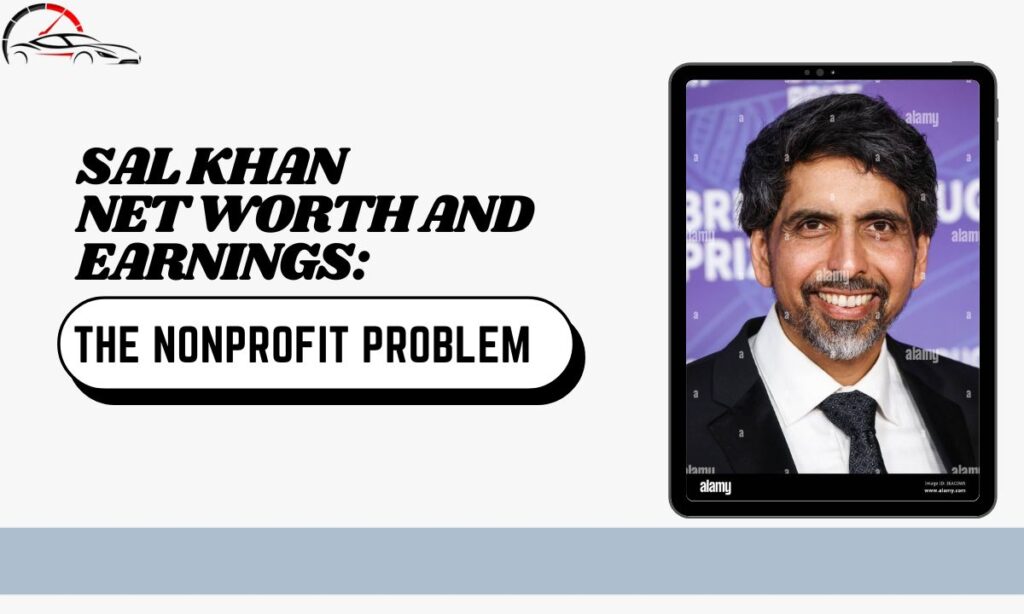
Here is the core issue with any Sal Khan net worth figure: nonprofit executives do not hold equity the way startup founders do. There is no stock ticker, no ownership stake, and no acquisition payday waiting at the end of the story.
What does exist is public tax filing data. Khan Academy’s IRS Form 990 filings from recent years have shown Khan’s reported compensation as CEO sitting in the range of roughly 800,000 to 900,000 dollars annually, a healthy nonprofit executive salary, but nowhere near what a founder with a comparable user base would earn in the for profit world.
Because verified public records only cover salary, most “net worth” figures floating around online are estimates built on guesswork, not disclosed assets. That is why you will see wildly different numbers depending on which site you check.
How the Money Actually Works
Sal Khan’s income is best understood as layered rather than singular:
- CEO salary from Khan Academy, disclosed through nonprofit tax filings
- Book royalties, most notably from his bestseller “The One World Schoolhouse,” published in 2012
- Paid speaking engagements at conferences, universities, and corporate events
- Possible advisory or board involvement with education focused ventures
None of these income streams involve founder equity in Khan Academy itself, since the organization has no shareholders to begin with. That structural fact is the single biggest reason a precise, universally agreed Sal Khan net worth figure does not exist.
The Peer Comparison Table
Comparing Khan to other education founders makes the nonprofit tradeoff much easier to see. The pattern is consistent: founders who kept a nonprofit structure capped their personal upside on purpose, while founders who built for profit companies collected the traditional startup payout.
| Founder | Organization | Structure | Personal Equity | Primary Income Source |
| Sal Khan | Khan Academy | Nonprofit | None | Salary, royalties, speaking fees |
| Jimmy Wales | Wikipedia / Wikimedia | Nonprofit | None | Speaking fees, side ventures |
| Daphne Koller | Coursera | For profit | Yes | Equity, stock value |
| Chip Paucek | 2U | For profit | Yes | Equity, stock value |
The takeaway is simple. Nonprofit founders like Khan and Wales chose a mission focused structure that limits personal wealth by design, while their for profit counterparts built companies where founder equity is the main wealth engine.
Uncomfortable Truth
The uncomfortable truth is that Sal Khan almost certainly could have built a for profit ed tech company worth billions and personally captured a meaningful share of that value. He chose not to, which means every year Khan Academy grows, Khan himself gets no direct financial upside from that growth, only a stable executive salary.
Unanswered Question
The genuinely unanswered question is how much Khan has quietly built up outside of Khan Academy through decades of book royalties, investments, and speaking income. Without a public financial disclosure, that side of his balance sheet stays private, which is exactly why estimates swing so widely across different websites.
Methodology Transparency
Most credible estimates lean on three sources: nonprofit tax filings that disclose executive compensation, public statements Khan has made about his own finances, and reasonable assumptions about book and speaking income based on his level of fame. Anything beyond that, especially figures in the hundreds of millions or billions, is speculation dressed up as certainty, and readers should treat those numbers with real skepticism.
Personal Life: The Man Behind the Whiteboard

Sal Khan is married to Umaima Marvi, a physician, and the couple has three children. The family has largely stayed out of the public spotlight compared to Khan’s own media presence, which mostly centers on education advocacy rather than personal branding.
Khan has spoken publicly about wanting his own children to benefit from the same style of self paced, mastery based learning he built Khan Academy around. That belief led him to co-found Khan Lab School in 2014, a small independent school in California that applies Khan Academy’s teaching philosophy to a physical classroom setting.
He is known in interviews as low key and soft spoken, a contrast to the more flashy personas common among Silicon Valley founders, which fits the broader story of someone who built a massive platform without chasing a massive personal fortune.
Philanthropy: Khan Academy Is the Philanthropy
For most public figures, philanthropy is something separate from their career, a foundation or a set of donations layered on top of a for profit business. For Sal Khan, the entire career is the philanthropy. Khan Academy itself operates on donations, grants, and corporate partnerships rather than tuition or subscription fees, and Khan draws only a salary from an organization he could have structured to make him personally wealthy.
Major donors and partners over the years have included large foundations and technology companies that fund specific initiatives, from translating lessons into multiple languages to expanding standardized test prep content. Khan’s own contribution to that philanthropic engine is less about writing checks and more about the two decades of unpaid and underpaid work that got the platform off the ground before major funding arrived.
Controversies: The Khanmigo Reality Check
Khan Academy launched Khanmigo, an AI powered tutoring assistant, in 2023, positioning it as a major evolution of the platform’s mission. The tool promised personalized, conversational tutoring powered by large language model technology, a natural next step for an organization built on individualized learning.
Early rollout brought real criticism. Educators and reviewers flagged instances where Khanmigo gave inaccurate math explanations or hallucinated facts, a serious concern for a tool aimed directly at students who may not know enough to catch the errors themselves. Some also questioned the cost of running an AI tutor at scale for a platform built on being free, and how that expense fits a nonprofit funding model.
Khan Academy has continued updating Khanmigo through 2025 and 2026, working with school district pilots and refining accuracy safeguards. Whether the tool has fully overcome its early reliability issues remains a genuinely mixed picture depending on which classroom you ask.
Legacy: What It Costs to Give Something Away
Sal Khan’s legacy is not measured in a net worth figure, and that is precisely the point critics and admirers both raise. He built a platform used by tens of millions of students worldwide, kept it free, and structured it so he personally cannot cash out the way a founder of an equivalent for profit company would.
That tradeoff has a real cost. Had Khan built Khan Academy as a venture backed startup, conservative comparisons to other ed tech companies suggest his personal stake could have been worth hundreds of millions of dollars, possibly more. Instead, his legacy is measured in lessons watched, students helped, and a nonprofit model other education founders now reference when deciding how to structure their own organizations.
Sal Khan’s Current Activities (as of 2026)
Heading into 2026, Khan remains active as Khan Academy’s CEO and public face. His current focus areas include:
- Expanding Khanmigo access to more school districts through partnership programs
- Public speaking on artificial intelligence’s role in classrooms, including conference keynotes
- Continued content expansion across subjects beyond the platform’s original math and science base
- Advocacy work around free access to quality education as a global equity issue
Khan Academy’s user base has continued climbing, with the platform reporting well over a hundred million registered users globally, reinforcing that its influence keeps growing even as Khan’s personal financial upside stays capped by design.
FAQs
What is Sal Khan’s net worth?
There is no verified, publicly disclosed figure. Estimates range widely, but the most defensible numbers, based on nonprofit salary filings, sit well below the inflated hundred million and billion dollar claims seen on some websites.
How does Sal Khan make money outside his salary?
Book royalties from titles like “The One World Schoolhouse” and paid speaking engagements at conferences and events make up his main additional income sources.
Is Sal Khan a billionaire?
No credible evidence supports that claim. It likely stems from confusion with Khan Academy’s overall impact and reach rather than Khan’s personal assets.
Does Sal Khan own equity in Khan Academy?
No. Khan Academy is a nonprofit organization, so there are no shares or ownership stakes for Khan or anyone else to hold.
Has Khanmigo been a success?
It has grown steadily since its 2023 launch and expanded into more schools, though early accuracy criticisms mean its long term reputation is still being established.
Is Sal Khan related to Bollywood actor Salman Khan?
No. They are entirely unrelated public figures who happen to share a similar name, which frequently causes search confusion and mismatched net worth figures online.
What is Sal Khan’s salary at Khan Academy?
Nonprofit tax filings have placed his disclosed compensation in the range of roughly 800,000 to 900,000 dollars annually in recent years.
How old is Sal Khan?
Khan was born on October 11, 1976, making him 49 years old as of 2026.
What is Sal Khan’s height and weight?
Khan has not publicly disclosed his height or weight, and no verified figures exist from a credible source.
Why did Sal Khan choose a nonprofit model instead of a startup?
He has said publicly that he wanted education access to remain free and mission driven rather than shaped by investor return expectations, even though a for profit path likely would have made him far wealthier personally.
You can also checkout this article as well Leo Skepi Net Worth 2026, Age, Career, Family and Biography
Conclusion
Sal Khan’s story is unusual in the world of wealth reporting precisely because the usual formula does not apply to him. There is no stock price, no funding round, no acquisition to point to. What exists instead is a nonprofit CEO salary, some book and speaking income, and a platform used by more people than most for profit companies ever reach.
The most honest answer to “what is Sal Khan’s net worth” is that nobody outside his own accountants truly knows, and the public estimates you see online should be read with real caution. What is far easier to verify is the scale of what he built and the deliberate choice he made to give away the financial upside that came with it.
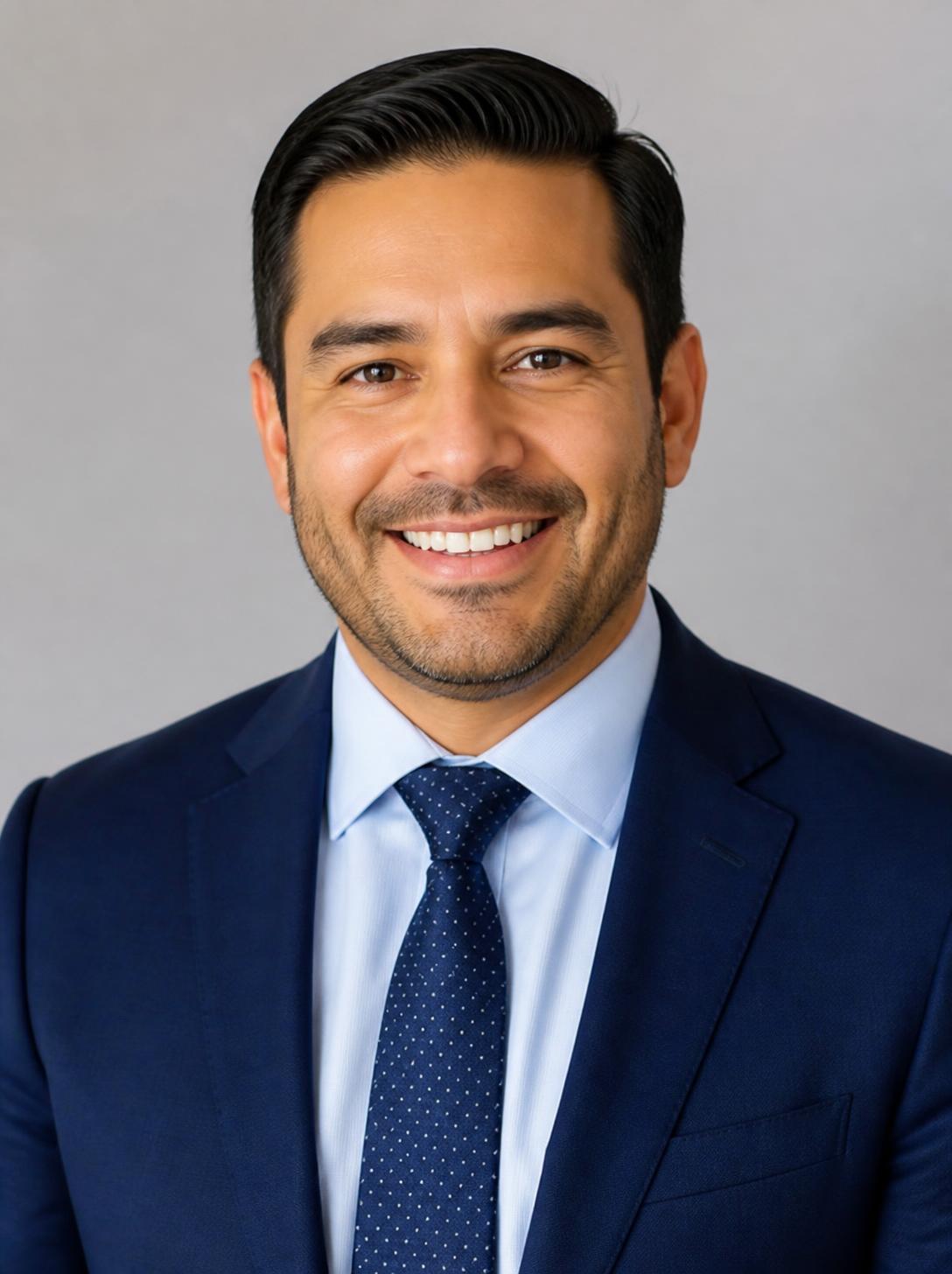
Henry Lawson is a celebrity content writer at Auto Magezines, covering entertainment news, public figures, and industry trends. He focuses on accurate research, credible sources, and engaging storytelling to deliver trustworthy content. Henry is committed to creating well-structured, informative articles that help readers stay updated on the latest celebrity developments.